4.9 / 5

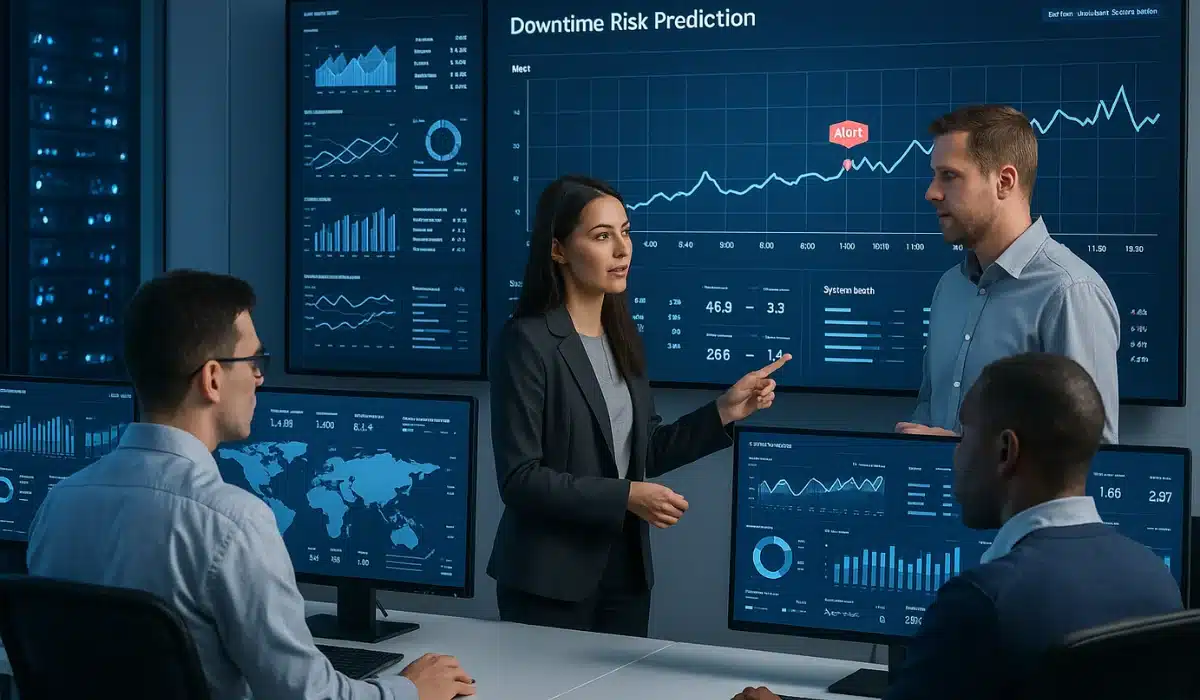
Downtime isn’t just inconvenient. It’s expensive. Every minute a system slows or fails drains productivity, harms reputation, and erodes customer trust. In a connected workplace, even short interruptions can disrupt operations and revenue.
According to the Uptime Institute’s 2024 Resiliency Survey, the industry still sees 10–20 high-profile IT outages every year, and 55% of organizations experienced an outage in the past three years, most of which were preventable.
See how expert-led predictive analytics and AI-powered, real-time monitoring let you anticipate and prevent problems before they escalate. By turning information into clear, data-driven decisions, you can act early, reduce risk, and strengthen operational continuity.
In this article, you’ll discover how to build stronger maintenance strategies with predictive analytics that prevent downtime, improve uptime, and keep your business moving with confidence.
Key takeaways
- Early anomaly detection through predictive analytics helps prevent downtime and maintain system reliability.
- By applying machine learning, your team can anticipate hardware and network failures before they happen.
- AI-powered monitoring improves performance, boosts resource efficiency, and extends uptime.
- Using data-driven insights, you can move from reactive IT management to proactive prevention.
- With Diamond IT’s expertise, predictive analytics becomes a practical strategy for optimizing operations and ensuring consistent uptime.
Why downtime persists in monitored environments
Modern IT environments may look secure behind layers of dashboards and alerts. Yet downtime still occurs because most monitoring systems react only after something fails, rather than preventing it.
Traditional tools generate floods of alerts with no clear prioritization. That noise hides the root cause and traps teams in reactive maintenance. When platforms are disconnected, misalignment between tools leaves blind spots that delay early detection.
Consider a simple example. A slow rise in server latency overnight went unnoticed because it appeared in only one dashboard. By morning, the delay had escalated into a complete outage, resulting in hours of unplanned downtime and lost productivity.
Audit your monitoring stack to ensure all systems feed into a single unified dashboard. Better integration means faster insight, less noise, and fewer missed warning signs.
If you’re unsure where to start, use Diamond IT’s integration checklist to identify monitoring gaps and unify your alerting workflows.
Research supports the need for proactive integration. Verizon’s 2025 Data Breach Investigations Report analyzed 22,052 incidents and confirmed 12,195 breaches, down from 30,458 the previous year due to refined data-collection and verification methods.
What predictive analytics brings to IT operations
Diamond IT’s predictive analytics framework gives your team the power to anticipate failures rather than react to them. By collecting real-time data across servers, networks, and clouds, you can spot performance shifts before they affect users.
Through machine learning and predictive models, your team can analyze historical data, forecast potential failures, and schedule predictive maintenance before downtime occurs. These insights turn complex system behavior into actionable intelligence that minimizes cost and disruption.
Automation then takes the strategy further. Workloads can be automatically rebalanced, and maintenance tasks can be triggered based on predictive signals. This approach optimizes performance, reduces equipment strain, and extends system life.
For instance, an AI-driven analytics tool can filter redundant alerts, allowing your engineers to focus on issues that truly need attention. The result is faster response times, fewer false positives, and measurable gains in uptime.
A recent PwC Cloud and AI Business Survey found that 92% of Top Performers plan to increase cloud budgets in the next cycle, and 67% report a formal enterprise AI strategy, proving that predictive, data-driven operations are becoming the new standard.
To achieve the same level of resilience, schedule a predictive audit with Diamond IT. Our specialists can help you activate predictive alerts, integrate automation tools, and create workflows that turn insight into action.
How predictive analytics works in IT environments
Diamond IT’s PredictiveOps process turns raw data into reliable foresight. It begins by connecting every part of your environment so that insights flow freely. Logs, sensor data, and IoT feeds are merged into a single dataset, providing complete visibility across your infrastructure and assets.
After building the data foundation, machine learning algorithms train on historical performance and failure records to identify trends that lead to unplanned downtime. These models supply the early context needed for proactive maintenance and faster troubleshooting.
During real-time monitoring, automated systems deliver prioritized alerts that serve as early warning signals. Your maintenance teams can respond to the most urgent issues before they cause interruptions. Human oversight remains critical; engineers review the model’s predictions, refine maintenance schedules, and strengthen preventive maintenance practices to keep accuracy improving over time.
An IoT-enabled data center using this workflow cut maintenance interventions by 30% and extended asset life across multiple facilities. This approach reduces risk, extends equipment lifespan, and improves budget predictability. To get started, map your data sources to lifespan metrics to keep feedback loops continuous and measurable.
Shifting from reactive to predictive IT
Moving from reactive IT to predictive management changes how organizations protect uptime and plan for growth. Diamond IT’s PredictiveOps framework guides this transition. It combines automation, analytics, and human validation into one model.
| Approach | Reactive IT | Predictive IT |
|---|---|---|
| Response | After failure | Before failure |
| Cost impact | High (unplanned) | Controlled (planned) |
| Visibility | Alerts only | Real-time insights |
| Decision-making | Manual | Data-driven |
| Outcome | Downtime | Uptime and optimization |
Predictive workflows improve decisions, connect maintenance actions to business goals, and increase supply chain visibility. When paired with the internet of things and artificial intelligence, the model becomes smarter over time, identifying subtle risks and opportunities that traditional monitoring misses.
A finance firm that adopted predictive maintenance through Diamond IT’s PredictiveOps approach cut unplanned downtime by 40% and improved customer experience benchmarks. The ROI was clear: lower emergency repair costs, higher uptime, and stronger stakeholder confidence.
To gauge where you stand, benchmark your current maintenance strategy against predictive KPIs. Diamond IT can help define metrics that align with uptime, cost control, and long-term optimization, turning data into a true competitive advantage.
Demonstrating predictive analytics across industries
Predictive analytics isn’t limited to one sector. Every industry that depends on uptime and performance can apply it to reduce risks and increase operational efficiency. These real-world examples show how data, automation, and foresight create tangible business outcomes.
- Manufacturing: Predictive systems track latency and vibration data to detect production slowdowns before equipment failures occur. This prevents costly downtime and supports consistent output.
- Healthcare: Hospitals and clinics rely on AI-powered tools to enable predictive maintenance, keeping EHR systems running smoothly. Fewer outages mean clinicians can focus on patients, not technology.
- Finance: Banks use real-time analytics to forecast transaction surges and preempt overloads during market peaks. This reduces service interruptions and enhances customer trust.
- Public sector: Agencies apply IoT data for asset management, identifying infrastructure weaknesses early and prioritizing modernization funding where it matters most.
According to NASCIO’s 2024 State CIO Survey, data analytics and predictive analytics rank among the top piloted business practices. 75% of states have an enterprise vision, and 64% require agencies to follow established roadmaps to enable predictive management.
These applications demonstrate how predictive frameworks align technology investments with measurable value: reduced outages, more innovative maintenance strategies, and stronger resilience across industries.
Implementing Diamond IT’s predictive management framework
Diamond IT’s PredictiveOps framework brings structure and scalability to predictive analytics adoption. It integrates monitoring, automation, and advisory support so your team can turn insights into reliable uptime.
- ManageCentric: Delivers AI-driven infrastructure monitoring for reliability and stability across cloud and on-prem environments.
- SecureCentric: Combines cybersecurity data with performance metrics to detect vulnerabilities early and reduce exposure to downtime.
- CloudCentric: Uses automation to scale workloads intelligently and prevent bottlenecks before they affect users.
- vCIO Services: Translates predictive models and metrics into actionable business strategies, ensuring IT goals align with long-term growth.
One healthcare client combined SecureCentric and CloudCentric monitoring to eliminate overlapping alerts and cut disruptions. This proactive approach not only improved uptime but also delivered measurable cost savings through reduced emergency response hours.
The HIMSS 2024 Healthcare Cybersecurity Survey confirms that a majority of healthcare organizations expect cybersecurity budgets to increase into 2025, investments that fund predictive monitoring to reduce downtime and risk.
To experience similar results, schedule an assessment with Diamond IT to identify where predictive analytics fits in your technology stack. The insights from PredictiveOps can help you anticipate problems, allocate resources efficiently, and keep your operations running without interruption.
Measuring the ROI of predictive IT
The value of predictive IT is measurable from the moment it’s implemented. By tracking reductions in unplanned downtime and overall maintenance costs, you gain a clear picture of how predictive analytics supports efficiency and business growth.
Over time, you’ll see additional benefits compound. Maintenance strategies become more precise, extending equipment lifespan and improving performance consistency. As systems stabilize, your team can focus on innovation instead of crisis management.
Quantifying avoided interventions and emergency responses reveals tangible cost savings, while real-time insights highlight where operations can be further streamlined. Many organizations also see higher customer satisfaction scores and lower technical debt once uptime becomes predictable.
Each avoided incident is a success story of improved predictive accuracy and better resource allocation. When breakdowns become rare exceptions, resilience turns into a competitive advantage.
Use Diamond IT’s ROI calculator to forecast your long-term gains. Every hour of uptime boosts productivity, stability, and profitability.
Final thoughts – from data to decision
Predictive analytics turns data into foresight, helping teams prepare for risks before they happen. Advanced analytics help you make faster, smarter decisions that safeguard operations and maximize uptime.
Preventing downtime isn’t just a technical win. It’s a strategic move that protects revenue, strengthens customer confidence, and keeps your business ahead of disruption.
If you’re ready to move from reacting to predicting, discover how Diamond IT can turn your data into uptime.
Schedule your predictive IT audit today to start building proactive, measurable IT resilience.
FAQs
How does predictive analytics prevent IT downtime?
Predictive analytics reduces downtime by spotting anomalies before they trigger failures. It analyzes system data and performance trends to uncover early warning signs, allowing teams to act fast and keep operations running without disruption.
What’s the ROI of predictive analytics in IT maintenance?
ROI comes from fewer outages, lower maintenance costs, and longer asset life. Tracking avoided incidents and optimized maintenance schedules yields clear cost savings and stronger uptime.
How can a managed IT provider improve predictive maintenance?
A managed IT partner improves predictive maintenance by unifying data across systems for real-time visibility. This boosts forecast accuracy and enables faster, automated responses that minimize downtime and risk.