4.9 / 5

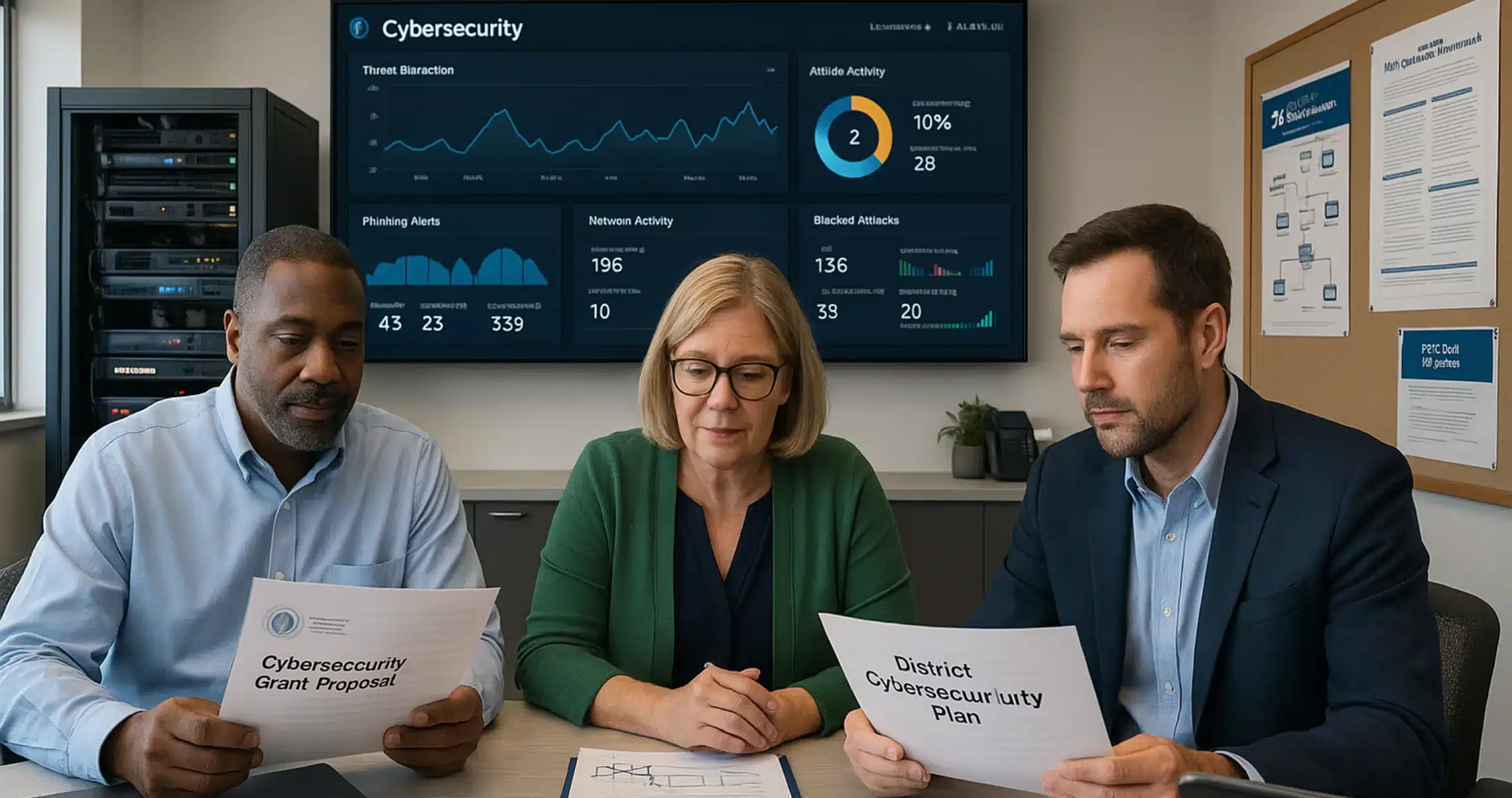
If you’re a K–12 district leader, IT director, or grant manager, you know your schools are bigger targets for cybercriminals than ever.. In early 2025 alone, ransomware attacks on educational institutions rose 23%, with 130 incidents and average ransom demands hitting $556,000. Those attacks can lock networks, leak student records, and disrupt learning for weeks.
The challenge is clear: you must protect infrastructure, secure sensitive data, and stop costly cyber incidents, all with tight budgets and stretched IT teams. That’s why cybersecurity grants for schools have become essential. These grants can mean the difference between outdated defenses and a modern, compliant security setup that resists ongoing threats..
In this guide, you’ll learn:
- Which federal, state, and nonprofit programs, like the FCC Schools and Libraries Cybersecurity Pilot Program and the State and Local Cybersecurity Grant Program (SLCGP), can fund your upgrades.
- How to meet eligibility requirements, navigate the application process, and make your proposal stand out.
- The best ways to use grant funds include network upgrades, endpoint protection, identity management, training, and incident response.
- How to track results and position your district for future funding.
By the end, you’ll know where to find funding, how to win it, and how to turn it into lasting cyber resilience for your schools.
Key takeaways
- Treat cybersecurity grants for schools as strategic capital, not emergency cash, by aligning them with a multi-year cybersecurity plan that hardens your district’s infrastructure and policies.
- Build funding proposals around measurable outcomes, such as reduced phishing incidents or improved incident response times, to prove ROI and strengthen future applications.
- Leverage cross-department collaboration between IT, finance, and emergency management to show funders you can execute complex, district-wide security initiatives.
- Use authoritative data from CISA, GAO, and SchoolSafety.gov to turn abstract threats into urgent, fundable priorities that resonate with grant reviewers.
- Prioritize scalable, education-specific tools with built-in training and compliance support so your district’s cybersecurity posture keeps pace with evolving risks.
What types of cybersecurity grants are available for schools
Securing cybersecurity grants begins with understanding the available programs and how each can benefit your district. These programs include federal, state, and nonprofit funding, each with its priorities, rules, and timelines. By knowing your options early, you can focus on grants most likely to succeed and skip ones that don’t fit.
FCC Schools and Libraries Cybersecurity Pilot Program
The Federal Communications Commission (FCC) created this pilot to test whether the Universal Service Fund can help K–12 schools and libraries strengthen defenses against modern cyber threats.
You can apply funding toward:
- Enterprise-grade firewalls and intrusion detection systems
- Advanced endpoint protection and real-time monitoring
- Secure Wi-Fi and school networking controls
Suppose your district already participates in the E-Rate Program. In that case, you may find the FCC’s cybersecurity pilot program a natural extension, but note that it’s separate and has distinct application windows.
State and Local Cybersecurity Grant Program (SLCGP)
The Department of Homeland Security (DHS) and Cybersecurity and Infrastructure Security Agency (CISA) run the SLCGP, which gives local governments, including public schools, funding to:
- Implement a district-wide cybersecurity plan aligned with the National Institute of Standards and Technology (NIST) standards
- Address cybersecurity risks and known vulnerabilities
- Improve incident response capabilities
- Safeguard critical infrastructure, such as learning management systems and student information databases
AWS K12 Cyber Grant Program
Amazon Web Services offers funding to help K–12 school districts modernize their security posture. Typical uses include:
- Moving data and applications to secure cloud environments
- Implementing multi-factor authentication (MFA)
- Expanding endpoint monitoring and threat detection
AWS often pairs grants with training credits so your IT team can build lasting skills.
IBM and Amazon Education Security Grants
These corporate philanthropy initiatives offer more than just money. IBM often provides software, consulting, and in-kind resources. Amazon Education’s grants can include both funding and service credits, which you can use for cloud security or compliance monitoring.
Homeland Security and Tribal Cyber Grants
The DHS also funds tribal governments and educational institutions that serve tribal communities. These grants support emergency management and focus on resilience planning and incident response tools that protect both community safety and data security.
New 2025 initiatives to watch
In 2025, CISA and the U.S. Department of Education announced expanded cybersecurity resources for K–12 education, including:
- Free technical assistance and risk assessments
- Updated guidance for aligning policies with the NIST Cybersecurity Framework
- Training modules for IT teams and school leaders
Key eligibility requirements for cybersecurity grant programs
Before applying, check if your district qualifies. Cybersecurity grants for schools often have strict eligibility rules, and missing one requirement can make you lose the opportunity.
Public vs private K–12 eligibility
Most federal programs, including the FCC pilot and the SLCGP, are open only to public K–12 school districts and public schools. Private or charter schools may need to seek state-level or nonprofit funding opportunities.
Tech-readiness and reporting capabilities
Many grantors want proof that you can set up and maintain upgrades effectively. You may be asked to provide:
- An existing district-wide cybersecurity plan
- Results from a recent IT infrastructure assessment
- A documented ability to track performance metrics and spending
Required documentation and timelines
Each program has its own application window, so monitor deadlines closely. Expect to prepare:
- Detailed budgets and spending justifications
- Vendor quotes for proposed cybersecurity services
- Board or superintendent approvals
Staying organized from the start makes the application easier and boosts your credibility with reviewers.
What can cybersecurity grant funding be used for?
Winning cybersecurity grants for schools is only half the job. Using the funds wisely helps upgrades last and gives measurable improvements in your district’s security.
Network infrastructure upgrades (firewalls, switches, Wi-Fi security)
Grants can fund enterprise-grade firewalls, secure switches, and encrypted Wi-Fi to block unauthorized access and threats.
Endpoint protection and antivirus tools
Modern endpoint protection detects threats in real time and can stop ransomware before it spreads. Pair antivirus software with behavior-based monitoring for the strongest defense.
Identity and access management solutions
Centralized identity systems with multi-factor authentication protect sensitive records and make sure only approved users have access to key systems.
Staff training and student awareness programs
CISA warns that human error remains one of the most significant cybersecurity risks in K–12. Utilize grants for phishing simulations, staff workshops, and safety campaigns to empower staff and students as the first line of defense.
Incident response tools and backup systems
Strong incident response plans require the right tools: immutable backups, secure offsite storage, and quick-recovery systems. Grants can cover the hardware and software you need to respond effectively when cyber incidents occur.
How to apply for a cybersecurity grant: Step-by-step
Applying for cybersecurity grants for schools doesn’t have to be overwhelming. By following a structured approach, you can improve your odds of success.
Locating and reviewing open opportunities
Start by searching Grants.gov for federal funding, state education websites for local grants, and trusted nonprofit databases.
Pre-application prep and internal audits
Review your current cybersecurity needs and weaknesses.. Map these to the allowable expenses for each program so your proposal aligns perfectly with the funder’s goals.
Application submission checklist
Make sure you include:
- Completed forms and signatures
- Budget breakdown of grant funds
- Letters of support from leadership
- Documentation of your current cybersecurity posture
- Vendor quotes for proposed upgrades
Post-award reporting expectations
Plan for quarterly or yearly reports. Funders expect data on progress, spending, and results.. Consistent reporting builds trust and strengthens your case for future funding.
Tips to strengthen your grant application
Winning cybersecurity grants for schools is competitive, but you can significantly improve your odds with a strategic, well-supported proposal. The goal is to present your district as not only eligible but also prepared to deliver measurable results that align with funder priorities.
Show alignment with national cybersecurity frameworks (e.g., NIST, CISA)
Reviewers want proof that your district’s plan follows recognized best practices. Map your proposed upgrades to the National Institute of Standards and Technology (NIST) Cybersecurity Framework and the Cybersecurity and Infrastructure Security Agency (CISA) K–12 guidance. This demonstrates that you are developing a sustainable strategy for safeguarding critical infrastructure, rather than merely reacting to the latest cybersecurity threats.
For example, if your plan includes implementing multi-factor authentication (MFA), explain how it supports NIST’s “Protect” function and aligns with CISA’s identity management recommendations for K–12 education.
Include an implementation roadmap
A clear, step-by-step roadmap gives funders confidence that you can deliver. Break it into:
- Procurement: Selecting approved cybersecurity services and vendors
- Deployment: Installing hardware, software, or network upgrades
- Training: Equipping staff and students with new security knowledge
- Review: Measuring success against your district’s defined metrics
Set realistic dates for each milestone and show how they fit within the grant’s performance period.
Use recent data on security incidents
Support your request with authoritative data from sources like SchoolSafety.gov, the Government Accountability Office (GAO), or CISA. Citing relevant cyber incidents and vulnerabilities makes your application urgent and credible.
Leverage cross-department collaboration
Show that cybersecurity is a district-wide priority. Highlight how IT, finance, facilities, and emergency management teams will work together to achieve the grant’s objectives. Funders respond positively to collaboration because it signals long-term commitment beyond the IT department.
Choosing the proper cybersecurity solutions
Cybersecurity grants are your chance to make lasting investments that protect your district now and in the future. Choose solutions that fit your district’s needs, can grow with you, and meet education technology standards.
Prioritize scalable and education-specific tools
Choose systems designed for K–12 school districts, such as learning management system (LMS) security modules, classroom device monitoring, and endpoint protection that works across mixed-device environments. Scalable tools let you expand coverage without replacing your entire setup when enrollment changes.
Ask about compliance with FERPA/CIPA/EdTech standards
Every solution you purchase with grant funds should meet Family Educational Rights and Privacy Act (FERPA) and Children’s Internet Protection Act (CIPA) requirements. This protects student data and keeps your district compliant with federal K–12 cybersecurity rules.
Look for vendors offering training and support
Technology works only as well as the people using it.. Work with providers that include:
- Onboarding sessions for IT staff and educators
- On-demand training for new hires
- 24/7 technical support to address issues quickly
These services extend the value of your cybersecurity services well beyond the installation phase.
What happens after you receive funding?
Getting funded is a milestone, but managing the next steps determines whether your grant delivers long-term impact. This is your chance to build a stronger cybersecurity posture and position your district for future opportunities.
Timelines for project implementation
Follow the schedule you presented in your application and keep your funder updated on progress. Finishing on time builds your district’s credibility and can help you win future local cybersecurity grant funding.
Tracking impact and usage of funds
Set metrics before you start. You might track:
- Reduction in phishing attempts reaching inboxes
- Faster detection of potential cyber threats
- Increased uptime for school networking systems after upgrades
Regular measurement helps you prove the value of the grant and identify areas for further improvement.
Renewals and future grant opportunities
Document every success, from reduced cybersecurity risks to successful staff training programs. Use these results to strengthen renewal applications or seek new funding from the FCC, DHS, or nonprofit groups.. A well-documented track record shows funders that their investment is producing measurable returns.
Building long-term cyber resilience in schools
Cybersecurity grants for schools enable school districts to address immediate cybersecurity risks, strengthen their cybersecurity posture, and protect critical infrastructure from evolving cyber threats.
At Diamond IT, we know funding alone isn’t enough. Real strength comes from combining these resources with a clear cybersecurity plan that prepares for tomorrow’s challenges as well as today’s.
We can help you secure the proper funding, implement impactful solutions, and create a sustainable security culture that protects students, staff, and data. Let’s preserve your district, strengthen your defenses, and keep learning uninterrupted.
When we work together, we use grant funding as the starting point; building systems, processes, and protections that last well beyond the project’s end date. That way, your investment brings lasting value and measurable security gains across your K–12 schools.
Contact us today to get started.
FAQs
What cybersecurity grants are available for K–12 schools in 2025?
In 2025, schools can apply for federal programs like the FCC Schools and Libraries Cybersecurity Pilot Program and the State and Local Cybersecurity Grant Program (SLCGP). Other sources include AWS K12 Cyber Grant Program, IBM Education Security Grants, and nonprofit or state-based funding.
Can private or charter schools get cybersecurity grant funding?
Most federal programs are for public K–12 districts, but private and charter schools may qualify for state-level or nonprofit grants. Check eligibility before applying, as requirements vary.
How should schools use cybersecurity grant funds for the best impact?
Schools can use grants for network upgrades, endpoint protection, identity management, staff training, and incident response tools. The best approach is to link these upgrades to a long-term security plan and track measurable results like reduced phishing incidents.