4.9 / 5

For mid-sized businesses in California, data storage is a complex puzzle. Cloud services are expensive, with cloud costs increasing by 30% for the average company between 2023 and 2024. Plus, mid-sized businesses must prioritize security to avoid cyberattacks and meet regulatory standards.
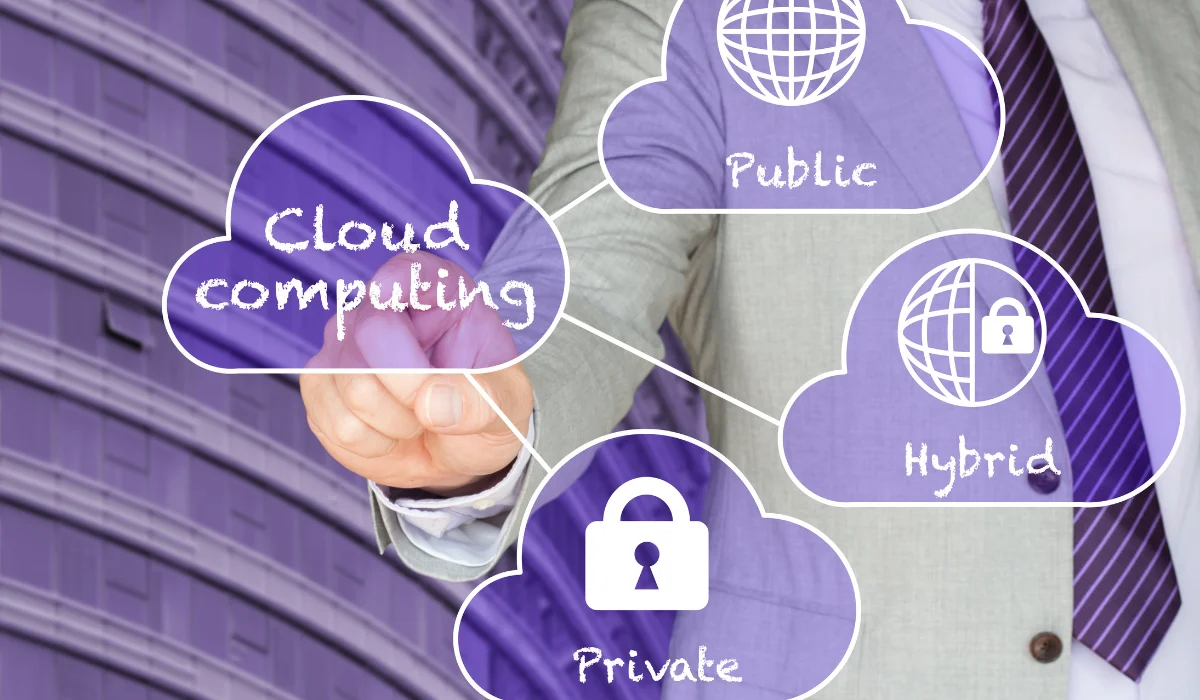
A hybrid cloud environment combines on-premise servers and private cloud infrastructure with third-party public cloud services to address these challenges. At Diamond IT, we’re here to help you build a hybrid cloud strategy that supports business growth and security. Here’s how hybrid cloud models work and why they’re so effective.
Key takeaways
- A hybrid cloud strategy blends private cloud, public cloud, and on-prem systems to meet specific business needs.
- Not every workload belongs in the public cloud. Sensitive data and latency-sensitive apps often perform better on-prem.
- California firms in legal, accounting, and healthcare benefit from hybrid cloud architecture tailored to regulatory requirements.
- Diamond IT helps you plan, migrate, and manage a hybrid cloud solution aligned with your long-term business goals.
What is a hybrid cloud strategy?
So how exactly does the hybrid cloud work? Let’s break it down.
Defining hybrid cloud computing for mid-sized businesses
Hybrid cloud computing is a data management model where businesses run some parts of their systems using public cloud providers, and other parts using on-premises infrastructure. 64% of IT leaders use hybrid cloud solutions in their businesses.
Hybrid cloud vs. multi-cloud
Hybrid cloud is when a business uses a combination of public cloud platforms and private server infrastructure to run their systems. This differs from a multi-cloud environment, which is when a business uses multiple cloud providers at the same time for cost-efficiency.
For example, a business with a multi-cloud environment might use both AWS and Azure at the same time.
Core components of hybrid cloud infrastructure
Here are some of the core components you’ll find in any hybrid environment:
- On-premises infrastructure: Businesses use servers and networking devices in their offices to manage sensitive data and applications.
- Public cloud providers: Service providers like Google Cloud, AWS, or Microsoft Azure offer flexible, scalable data storage for growing businesses.
- APIs: These digital interfaces connect software programs in the public cloud with those in the private cloud, and vice versa.
- Orchestration tools: These software platforms help you connect and automate workflows in your hybrid cloud environment.
- Management platforms: These tools provide visibility into your resource usage and cloud activity.
Common hybrid cloud use cases in California
There are many reasons why California businesses use hybrid cloud environments. These include:
- Storage expansion: Hybrid cloud is a quick and cost-effective way to expand your systems as your business grows.
- Disaster recovery: Public cloud services are an easy way to back up your on-premise data in case of emergency.
- Modernizing systems: If you have legacy software, a hybrid cloud environment can help you integrate with modern applications without compromising your existing operations.
Why California mid-sized businesses are moving to hybrid cloud
There are many benefits of hybrid cloud for growing businesses. Here’s why many California organizations are making the switch.
Balancing scalability with cost control
As your business grows, you’ll need more data storage and a flexible development environment. Public cloud environments help you add more data storage on-demand as you expand. Keeping your established operations on-prem helps keep cloud costs in check.
Meeting regulatory compliance requirements
Industries like law, accounting, and healthcare have to adhere to strict compliance standards. Most California businesses must also comply with CCPA for data protection.
With a hybrid approach, you can keep your most sensitive data on-premise for compliance control, while using public services for less sensitive operations.
Supporting remote and hybrid work
With an integrated hybrid cloud environment, your team can securely access the apps and files they need, even when working remotely.
Reducing downtime through business continuity planning
A hybrid cloud environment makes it easier to back up your data and develop a disaster recovery plan. You can back up essential files in both locations, so if one location is compromised, you won’t experience much disruption to your operations. This ensures you’re prepared for emergencies like cyber attacks, wildfires, or earthquakes.
Improving performance and reducing latency
A public computing environment helps you scale, but it can compromise the performance of sensitive workloads and apps. To avoid this, you can pair it with an on-premises data center to reduce latency.
Designing a hybrid cloud architecture that aligns with your goals
The most effective hybrid cloud systems are built to scale with your company while keeping your data safe and secure. Here’s how to build your hybrid cloud architecture.
Assessing your current IT infrastructure
Start by auditing your current IT environment. Take stock of your on-premise systems, taking note of any sensitive data or systems. Look for dependencies between apps or files in your current system.
During this audit, review your current cloud costs. See how they stack up against your budget and take note of any areas where you’d like to cut back.
Identifying which workloads belong where
Next, take stock of your current workloads and identify which ones could be safely transitioned to a public cloud provider. Make note of any data or workloads that need to stay on-premise for security, compliance, or operational reasons.
Planning for cloud migration and modernization
Before you make the switch to a hybrid environment, you’ll need to develop a cloud deployment plan. Identify which software programs you’ll need to modernize for the new cloud environment and if any workflows will need to change.
To migrate your systems, you’ll first need to create a framework for your cloud systems. Then, you can set up your SaaS platforms and configure your files.
Implementing strong cloud security measures
Both public and private cloud environments need cybersecurity features to keep hackers out. All data should be encrypted in transit and at rest, plus you’ll need strict access management policies to limit external use. Talk to your public cloud provider to see which security measures they already have and which you’ll need to configure yourself.
Leveraging automation and orchestration
Orchestration tools like Kubernetes and Terraform help you automate workflows within a complex cloud environment. These tools also help you integrate workflows from public and private cloud environments.
Managing and optimizing a hybrid cloud environment
Once your hybrid cloud environment is set up, you’ll need regular maintenance to keep it running smoothly.
Hybrid cloud management tools and platforms
Cloud management tools help you track resource usage, performance, and and security across your entire system so you can make informed IT decisions. Popular cloud management tools include Cisco Intersight, Google Anthros, and Red Hat OpenShift, just to name a few.
Cost optimization across public and private cloud
Cloud services are expensive, and regular cost optimization will prevent you from going over budget. Regularly review public cloud pricing to look for savings opportunities, and assess your systems to identify any unused resources you can cut.
Maintaining security and data privacy across environments
Data privacy in the cloud starts with your team. Host training sessions on cybersecurity best practices, and use access controls to minimize exposure to sensitive data.
Review regulatory compliance standards regularly and make adjustments to your systems as laws change. Document everything so you’re prepared in the event of an audit.
Ensuring portability and avoiding vendor lock-in
If you’re stuck with a specific cloud vendor, you could end up spending more than you need to, plus your operational flexibility is limited. To avoid this, use containerization tools like Kubernetes to keep your systems portable. This way, you can transition quickly without having to rebuild your entire system.
How Diamond IT supports your hybrid cloud strategy
At Diamond IT, we’re here to help you build a sustainable hybrid cloud infrastructure. Here’s how are team supports your cloud storage strategy.
Strategic IT consulting and roadmapping
We’ll consult with your team to learn about your business goals and current IT infrastructure. Then, we’ll create a roadmap to help you transition to a hybrid cloud approach.
Cloud migration and hybrid cloud deployment
Our team will help you create a cloud migration plan to transition your systems with minimal downtime. We’ll work with you to build a sustainable system framework and deploy key applications safely.
Ongoing hybrid cloud management and monitoring
We offer proactive monitoring to help you catch and fix any cloud issues as soon as they happen. Our team will also help you set up automations and optimize your system for peak performance.
Security, compliance, and business continuity
Our team is very familiar with both state- and industry-specific regulations and will help you build a compliant cloud atmosphere. We’ll also help you implement necessary cybersecurity measures and build a disaster recovery plan.
Final thoughts: Building a resilient hybrid cloud strategy for long-term growth
A hybrid cloud strategy is ideal for mid-sized businesses. You’ll get the flexibility and scalability of public cloud services, while keeping sensitive data in your on-premise servers. At Diamond IT, we help California mid-sized businesses develop and implement cloud initiatives. Get in touch with our team today to schedule a free consultation.
FAQs
What is the main benefit of a hybrid cloud strategy for mid-sized businesses?
A hybrid cloud approach allows you to balance scalability, cost efficiency, and data privacy while aligning IT infrastructure with your business needs.
How do I know which workloads should move to the public cloud?
Workloads that require scalability and flexible cloud resources are strong candidates, while sensitive data and latency-sensitive apps often remain in a private cloud or on-prem environment.
Can a hybrid cloud solution help with disaster recovery?
Yes. Hybrid cloud infrastructure allows you to replicate data between on-prem data centers and public cloud platforms, improving disaster recovery and business continuity.